
"coffee from subtropics"
2000 article(s) found

Appreciate the variety and taste of individual coffee from all over the world.
Professional coffee knowledge exchange more coffee bean information please follow the coffee workshop (Wechat official account cafe_style) Yunnan coffee bean varieties Typica and Bourbon coffee tree is a genus of Rubiaceae in botany. Coffee trees are native to subtropical Africa and some islands in southern Asia. In the 16th and 17th centuries, through Venice

The relationship between altitude, variety and coffee flavor? What are the advantages of coffee beans grown at high altitude?
Professional coffee knowledge exchange more coffee bean information please pay attention to the coffee workshop (Wechat official account cafe_style) altitude, variety and coffee flavor relationship? What are the advantages of coffee beans grown at high altitude? What are the characteristics of the flavor? (1) Bean size is positively correlated with altitude, and it is easier to produce full-bodied beans at high altitude, so some producing areas prefer bean size to hard.
Guatemala New Oriental region Guava Plain Manor boutique Coffee
Guatemala is one of the most important coffee producing countries in Central America, with long mountains and different regional climates, thus creating eight major coffee producing areas in Guatemala, all located on the highland topography of the subtropical climate, with abundant and stable rainfall and fertile volcanic ash soil is an excellent environment for coffee trees to grow. Plan del Guayabo is located next to the Volcn de Suchitn volcano.

The characteristic taste of Costa Rican coffee flavor round Tara bead
Costa Rican coffee flavor round Tara beads taste coffee beans are processed from coffee trees and are generally grown in tropical and subtropical regions. The best quality coffee beans in the world are produced in Indonesia and Colombia. In terms of output, Brazil ranks first in the world, accounting for about 30%, followed by Colombia-centered Central and South America, followed by Africa.

Guava Plain Manor Fine Coffee in Guatemala New Oriental region
Guatemala is one of the most important coffee producing countries in Central America, with long mountains and different regional climates, thus creating eight major coffee producing areas in Guatemala, all located on the highland topography of the subtropical climate, with abundant and stable rainfall and fertile volcanic ash soil is an excellent environment for coffee trees to grow. Plan del Guayabo is located next to the Volcn de Suchitn volcano.

What are the soil and climate requirements for growing coffee beans
Coffee tree belongs to Rubiaceae (Rubiaceae), which is a shrub or small tree. It is native to subtropical Africa or Asia. The seeds in its berries are the main raw materials of coffee. Commercially, the seeds of coffee are called coffee beans (coffee bean). Flowers and fruits of coffee trees Coffee flowers grow in leaf axils, Corolla basin-shaped, cheese-colored or white, ovary two-loculed, one ovule per locule, fruit pulp

Flavor description of Pacamara Coffee Bean introduction of regional varieties produced by grinding scale treatment
Flavor description of Pacamara Coffee beans Grinding scale Taste treatment area varieties introduced savanna climate. The plain area belongs to the tropical rain forest climate and the mountain area belongs to the subtropical forest climate. The average annual temperature is 25-28 ℃, the annual precipitation is more than 1800 mm in mountainous areas and about 1000 mm in coastal areas. The rainy season from May to October is of positive significance to the aroma of coffee. In 2005, Salva

Major coffee bean producing areas in the world
Coffee comes from coffee beans, which are harvested and processed from the fruit of trees. Coffee trees grow at the center of the equator, between latitudes of 25 degrees south and north, and are called coffee belts in tropical or subtropical countries. at present, coffee is produced in more than 60 countries. Coffee is produced in South America, Central America, the West Indies, Asia, Africa, Arabia, the South Pacific and
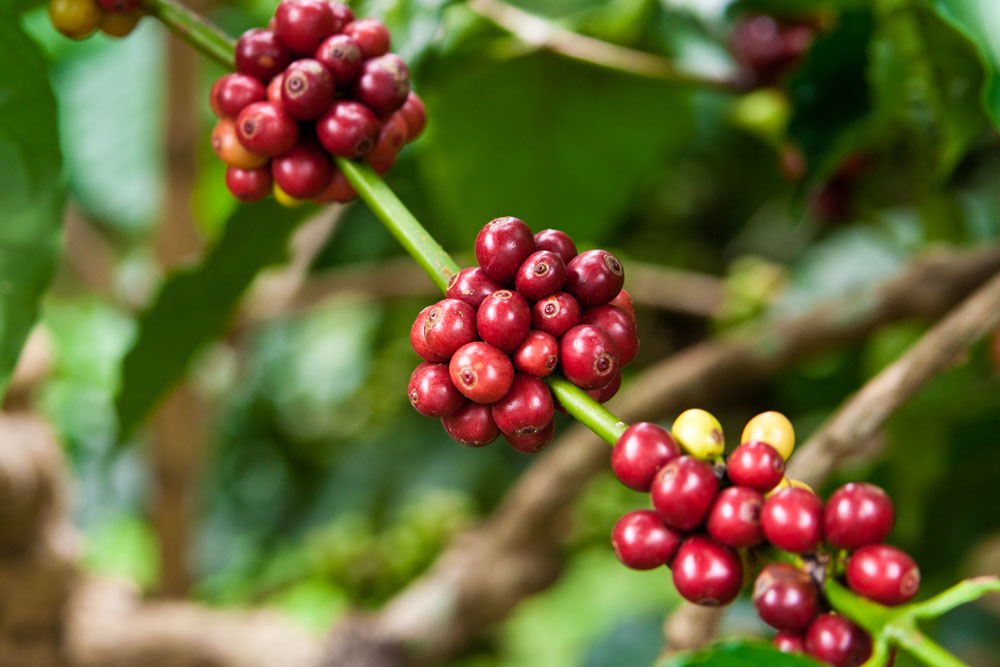
Guatemala wine tanning treatment SL28 raw bean coffee roaster Yang Jia
Guatemala is one of the most important coffee producing countries in Central America, with long mountains and different regional climates, thus creating eight major coffee producing areas in Guatemala, all located on the highland topography of the subtropical climate, with abundant and stable rainfall and fertile volcanic ash soil is an excellent environment for coffee trees to grow. Plan del Guayabo is located next to the Volcn de Suchitn volcano.
Basic knowledge of boutique coffee major coffee bean producing areas in the world
Coffee comes from coffee beans, which are harvested and processed from the fruit of trees. Coffee trees grow at the center of the equator, between latitudes of 25 degrees south and north, and are called coffee belts in tropical or subtropical countries. at present, coffee is produced in more than 60 countries. Coffee is produced in South America, Central America, the West Indies, Asia, Africa, Arabia, the South Pacific and
Introduction to the planting Climate of Coffee in Yunnan, China
At present, Yunnan coffee production is mainly distributed in Pu'er (180000 mu), Baoshan (100000 mu), Dehong (120000 mu) and Lincang (20 mu). Most of them are catimor varieties. At present, more than 80% of them are used as raw materials for instant coffee processing, some are supplied to Nestl é, and some are exported to Europe and the United States by local traders. From the grading criteria of specialty coffee

What is the variety of Honduran coffee? a brief introduction to the taste and flavor of Honduran coffee
Professional coffee knowledge exchange more coffee bean information please follow the coffee workshop (Wechat official account cafe_style) the front street of Honduran coffee flavor introduction Honduras has complex terrain and diversified climate. Located in the coastal plain of Central America, it has a tropical rain forest climate, with an average annual temperature of 31 ℃. The mountain belongs to subtropical forest climate, the annual average temperature is 23 ℃, the rainy season is from June to November, and the temperature is mild.
Introduction to the planting Climate of Coffee in Yunnan Province
At present, Yunnan coffee production is mainly distributed in Pu'er (180000 mu), Baoshan (100000 mu), Dehong (120000 mu) and Lincang (20 mu). Most of them are catimor varieties. At present, more than 80% of them are used as raw materials for instant coffee processing, some are supplied to Nestl é, and some are exported to Europe and the United States by local traders. From the grading criteria of specialty coffee

Wine sun treatment of guava plain manor in Guatemala New Oriental region
Guatemala is one of the most important coffee producing countries in Central America, with long mountains and different regional climates, thus creating eight major coffee producing areas in Guatemala, all located on the highland topography of the subtropical climate, with abundant and stable rainfall and fertile volcanic ash soil is an excellent environment for coffee trees to grow. Plan del Guayabo is located next to the Volcn de Suchitn volcano.
Variety and taste of Yunnan coffee beans introduction to the flavor and taste characteristics of Yunnan coffee producing areas
Follow the caf é (Wechat official account vdailycom) and found that the Beautiful Cafe opened a small shop of its own. Catimor, also known as Katim, which was bred by the Portuguese in 1959, has 3/4 Arabica blood and 1/4 Robusta blood, and is extremely strong and resistant.

Introduction to the planting Climate of Coffee in Yunnan, China
At present, Yunnan coffee production is mainly distributed in Pu'er (180000 mu), Baoshan (100000 mu), Dehong (120000 mu) and Lincang (20 mu). Most of them are catimor varieties. At present, more than 80% of them are used as raw materials for instant coffee processing, some are supplied to Nestl é, and some are exported to Europe and the United States by local traders. From the grading criteria of specialty coffee

How long does it take to grow coffee?
How long does it take for coffee to grow? coffee trees can blossom in a few years, and when coffee trees blossom and bear fruit will be introduced to you by the editor. Coffee tree opposite leaves are long oval, smooth leaves, the end of the branch is very long, few branches, and the flowers are white, open at the base of the petiole connecting the branch. In fact, the Arabs began to grow coffee in 525 BC.

Introduction to Mercedes Manor in El Salvador Coffee Manor
Savanna climate. The plain area belongs to the tropical rain forest climate and the mountain area belongs to the subtropical forest climate. The average annual temperature is 25-28 ℃. The annual precipitation is more than 1800 mm in mountain areas and about 1000 mm in coastal areas. The rainy season is from May to October. Don't underestimate El Salvador's coffee production. In its heyday, it was the world's fourth largest coffee producer, but decades of civil war almost dragged down coffee

Guatemala Fine Coffee Bean Flavor Taste Introduction Antigua Coffee Estate
Guatemala is located in the tropics. The northern and eastern coastal plains have a tropical rain forest climate, while the southern mountains have a subtropical climate. There are two dry and wet seasons in a year. May to October is the wet season, and November to April of the following year is the dry season. The central plateau is also the cultural center of Guatemala, where temperatures are mild all year round at 1300 to 1800 meters, with daily temperatures ranging from 18 to 28 degrees Celsius, and higher in January
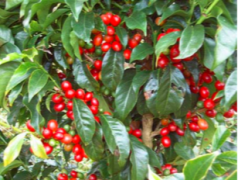
Guatemala Sleeping Beauty Estate Fine Coffee Bean Flavor Taste Aroma Description Roast Curve
Professional barista communication, please pay attention to coffee workshop (Weixin Official Accounts cafe_style) Guatemala El Quich Finca La Perla flavor description: rose peach, sweet peach aroma, acid lively and bright, fruit juice feeling obvious, taste thick and soft balance, good aftertaste sweetness Guatemala has seven coffee producing areas produced coffee beans are Arabica, all located in subtropical